DWI roadblocks in New York State are legal, widely used, and tightly regulated, operating under both federal and state constitutional frameworks to balance public safety with individual rights.
DWI roadblocks—also known as sobriety checkpoints—have become a prominent enforcement tool across New York State, reflecting the state’s ongoing commitment to reducing impaired driving. Their legal foundation is well established. At the federal level, the U.S. Supreme Court upheld the constitutionality of sobriety checkpoints in Michigan Dept. of State Police v. Sitz (1990), concluding that the state’s interest in preventing drunk driving outweighs the minimal intrusion on motorists. New York’s own courts reached a similar conclusion earlier in People v. Scott (1984), affirming that checkpoints are permissible under the state constitution when conducted according to strict guidelines.
The purpose of these checkpoints is straightforward: to deter and detect impaired drivers before they cause harm. Law enforcement agencies across the state deploy them during high‑risk periods—holiday weekends, late‑night hours, and near nightlife districts—where impaired driving incidents historically spike. Their presence alone is intended to discourage drivers from taking the wheel after drinking, and the state views them as a proactive measure rather than a reactive one. New York’s Vehicle and Traffic Law explicitly authorizes their use, reinforcing the idea that they are a legitimate and necessary tool for public safety.
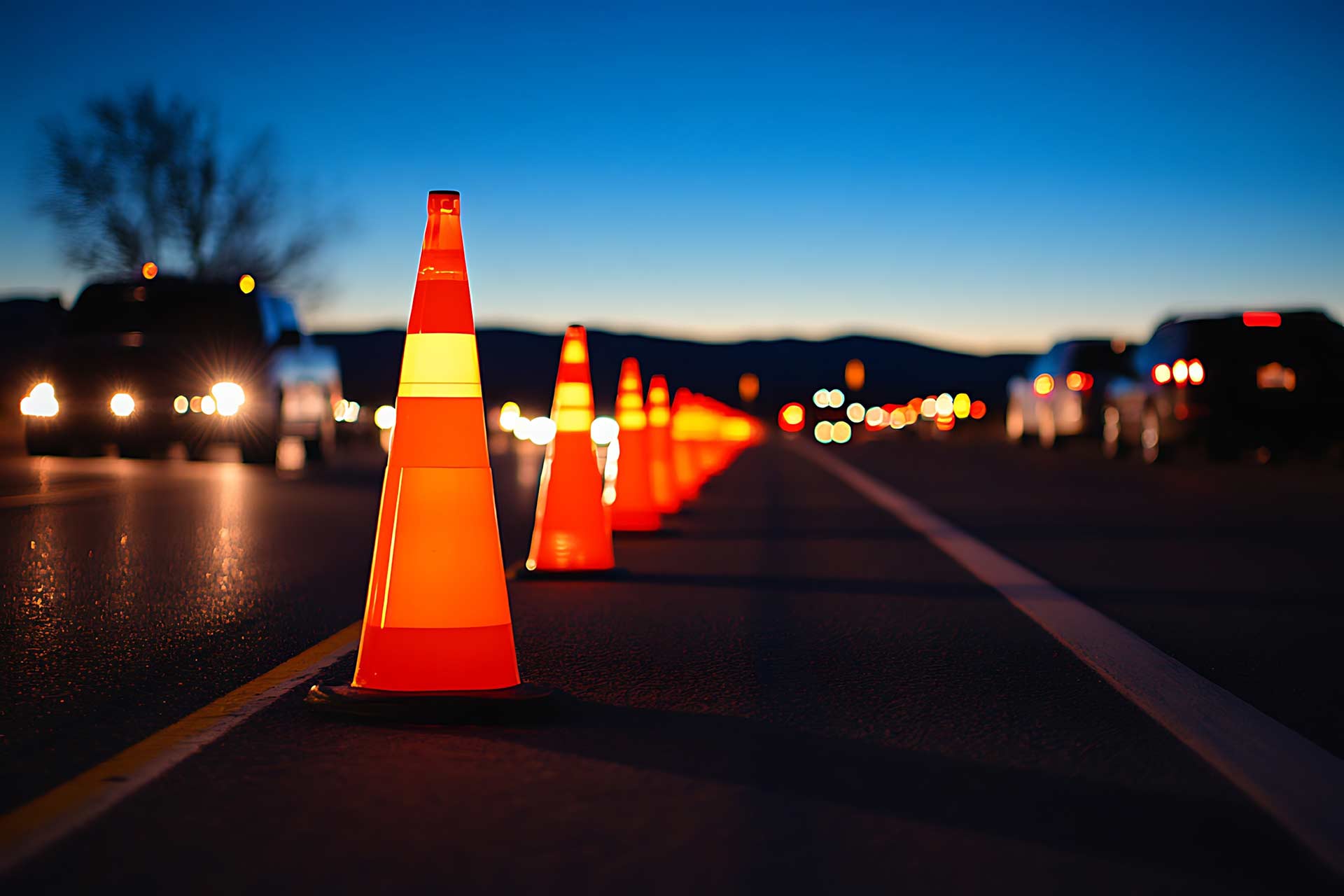
Despite their legality, DWI roadblocks remain controversial. Some drivers argue that they feel invasive or unfair, raising concerns about privacy and constitutional rights. New York courts have addressed these concerns by imposing strict operational requirements. Officers must follow predetermined, neutral criteria—such as stopping every third or fifth vehicle—to prevent discriminatory or arbitrary enforcement. Checkpoints must be clearly marked, well lit, and supervised by higher‑ranking officers who ensure compliance with written guidelines. These safeguards are designed to minimize the subjective discretion of individual officers and protect motorists from unreasonable searches or seizures.
When a driver is stopped at a checkpoint, the interaction is intended to be brief. Officers look for immediate signs of impairment, such as slurred speech or the odor of alcohol. If no such signs are present, the driver is typically allowed to proceed within seconds. If impairment is suspected, the driver may be directed to a secondary screening area for further evaluation. Even at this stage, constitutional protections remain in place. Drivers must provide license and registration, but they are not required to answer investigative questions beyond basic identification. Officers need reasonable suspicion to request field sobriety tests or a preliminary breath test, and they cannot search a vehicle without consent or probable cause.
The effectiveness of DWI roadblocks is often measured by the number of arrests and citations issued during enforcement periods. For example, during the Fourth of July weekend in 2021, New York’s Governor’s Office reported more than 10,000 traffic tickets issued, many of which resulted from sobriety checkpoint operations. This demonstrates both the scale of these enforcement efforts and their impact on driver behavior. While critics argue that the number of arrests relative to the number of vehicles stopped can be low, supporters counter that the deterrent effect—preventing impaired driving before it occurs—is the true measure of success.
DWI checkpoints also operate within a broader enforcement landscape that has grown increasingly strict. Recent changes to New York’s administrative penalties for impaired driving underscore the state’s seriousness. As of 2024–2025, any conviction under Vehicle and Traffic Law §1192 now carries 11 DMV points, a dramatic shift from prior rules where such offenses carried none. These administrative penalties operate independently of criminal charges, meaning that a driver arrested at a checkpoint may face significant consequences even before entering a courtroom. The financial burden has also increased, with mandatory Driver Responsibility Assessments totaling more than $1,400 over three years for a single conviction. These developments reflect a statewide trend toward harsher treatment of impaired driving, reinforcing the role of checkpoints as a frontline deterrent.
In practice, DWI roadblocks in New York represent a balance between public safety and constitutional rights. They are designed to be minimally intrusive while serving a critical function: preventing impaired drivers from endangering themselves and others. Their legality is well established, their procedures are carefully regulated, and their use is supported by both state and federal courts. Although debates about privacy and fairness continue, the state’s position remains clear—sobriety checkpoints are an essential component of its strategy to reduce alcohol‑related crashes and protect the public on New York’s roads.