If you are arrested for DWI in New York, the case often begins long before the Breathalyzer or other chemical test is administered. It begins on the side of the road—with the police officer’s observations, questions, and field sobriety testing.
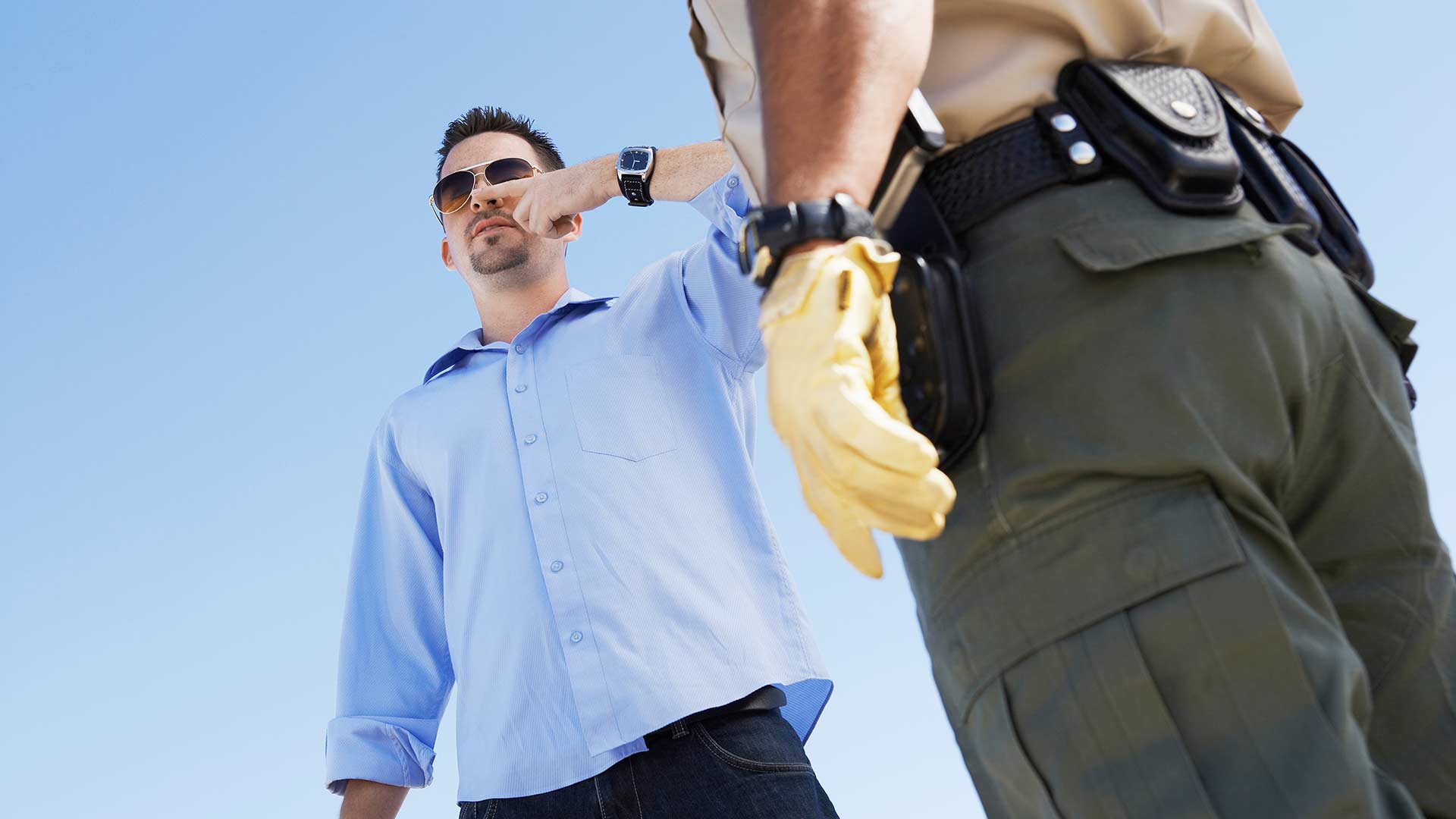
Field sobriety tests are designed to give an officer additional information when deciding whether a driver may be impaired by alcohol or drugs. In New York, the tests commonly encountered include the Horizontal Gaze Nystagmus (HGN), Walk-and-Turn, and One-Leg Stand. Police may also use other exercises, including alphabet recitation, counting backward, finger-to-nose testing, and other coordination or balance exercises. New York State police investigative materials specifically provide officers with forms for documenting HGN, Walk-and-Turn, One-Leg Stand, and other observations.
But an important point is frequently misunderstood: there is no single field sobriety test that determines whether someone is legally intoxicated.
Instead, police generally use the driver’s performance as one part of the overall investigation.
What the Officer Is Really Looking For
When an officer asks a driver to perform field sobriety tests, the officer is attempting to gather evidence.
The officer may already have observed:
- How the vehicle was being operated
- Whether the driver committed a traffic violation
- Whether the driver had difficulty producing a license or registration
- An odor of an alcoholic beverage
- Bloodshot or watery eyes
- Slurred or unusual speech
- Difficulty standing
- Difficulty walking
- Admissions concerning drinking
- The driver’s demeanor
- Other circumstances surrounding the stop
The field sobriety tests are then added to that collection of observations.
A New York court decision illustrates this approach. In one case, an officer testified about the defendant’s odor of alcohol, glassy eyes, slurred speech, stumbling, HGN, Walk-and-Turn, and One-Leg Stand before the defendant was arrested.
The prosecution may later present those observations collectively to establish that the defendant was intoxicated or impaired.
The Three Standardized Field Sobriety Tests
The three tests most commonly associated with the standardized field sobriety testing program are:
- Horizontal Gaze Nystagmus
- Walk-and-Turn
- One-Leg Stand
New York courts routinely encounter all three.
In a recent 2026 New York case, for example, an officer administered HGN, Walk-and-Turn, and One-Leg Stand and testified about the specific clues he observed during each test.
The word standardized is important.
The tests are not simply three random exercises invented by an individual police officer. They are based upon a standardized testing protocol. Consequently, the defense lawyer’s job is not merely to ask whether the defendant looked uncoordinated. The lawyer should also examine how the test was administered, what instructions were given, what conditions existed, and whether the officer actually followed the applicable protocol.
The Horizontal Gaze Nystagmus Test
HGN is fundamentally different from the balance tests.
The officer moves a stimulus—often a pen or finger—in front of the driver’s eyes and watches for involuntary eye movements called nystagmus.
The officer may look for clues including:
- Lack of smooth pursuit
- Distinct nystagmus at maximum deviation
- Nystagmus occurring before approximately 45 degrees
New York police investigative materials specifically identify those observations as part of the HGN evaluation.
A 2026 New York case described an officer using a pen approximately 12 to 16 inches from the defendant’s face and looking for the various HGN clues.
HGN can become particularly important because it involves a physiological response rather than simply asking whether someone can maintain balance.
That also means that HGN can raise different evidentiary and scientific questions than the Walk-and-Turn or One-Leg Stand.
The Walk-and-Turn
The Walk-and-Turn is designed as a divided-attention exercise.
The driver is generally instructed to maintain a heel-to-toe position, walk a specified number of steps, turn in a particular manner, and return.
Police may record clues such as:
- Losing balance during the instructions
- Starting before being told to begin
- Stopping while walking
- Failing to touch heel to toe
- Stepping off the imaginary line
- Raising the arms for balance
- Taking an incorrect number of steps
- Performing the turn incorrectly
New York State’s investigative form specifically provides spaces for officers to document these types of observations.
A critical defense issue, however, is that not every mistake necessarily means alcohol caused the mistake.
Someone can have difficulty with the Walk-and-Turn because of age, footwear, physical limitations, injury, the surface, weather, lighting, nervousness, or simply misunderstanding an instruction.
That is why the circumstances surrounding the test matter.
The One-Leg Stand
The One-Leg Stand is another divided-attention exercise.
The officer generally asks the driver to raise one foot, maintain the position, and count for a specified period.
The officer may look for:
- Swaying
- Putting the foot down
- Hopping
- Using the arms for balance
Again, the defense should look beyond the officer’s conclusion.
If the officer says, “He failed the One-Leg Stand,” the important question is:
What exactly did the defendant do?
And then:
What caused it?
That distinction can be extremely important.
Physical Conditions Matter
One of the most overlooked aspects of field sobriety testing is the driver’s physical condition.
A person with a bad knee, hip, ankle, back, or inner-ear problem may have difficulty performing a balance test regardless of whether that person has consumed alcohol.
Even the circumstances at the scene can matter.
In People v. Pantore, for example, the officer testified that the roadway conditions prevented him from administering the Walk-and-Turn and One-Leg Stand. The officer acknowledged that the slope of the roadway could have affected the defendant’s walking.
That illustrates an important principle for DWI defense attorneys:
The test does not occur in a laboratory.
It occurs on a roadside, often at night, sometimes on uneven pavement, sometimes in poor weather, and frequently while the driver is nervous and surrounded by police officers.
Those circumstances should be documented.
What Happens When the Driver Refuses?
New York law contains an important distinction between refusing a field sobriety test and refusing a chemical test.
There is no statutory requirement that a DWI suspect submit to field sobriety tests. However, New York courts have held that a defendant’s refusal to perform field sobriety tests can be admissible against the defendant under appropriate circumstances.
The New York Court of Appeals addressed field sobriety testing in People v. Berg, 92 N.Y.2d 701 (1999). New York courts have subsequently treated performance of field sobriety tests as non-testimonial physical evidence rather than testimonial communication.
This is one reason a driver should not assume that refusing a roadside test automatically makes the evidence disappear.
The police may instead testify about the refusal.
The Police Report Is Only Part of the Story
A typical DWI report may contain language such as:
“Defendant failed all standardized field sobriety tests.”
That sentence may sound powerful.
But it doesn’t tell the entire story.
A defense attorney should want to know:
- What test was administered?
- What instructions were given?
- Did the officer demonstrate the test?
- Did the defendant say he understood?
- Where was the test performed?
- Was the surface level?
- Was it dry?
- What footwear was the defendant wearing?
- Was the area adequately illuminated?
- Was traffic passing nearby?
- Was the defendant injured?
- Did the defendant disclose a medical condition?
- What exactly did the officer observe?
- Was the test captured on body camera?
- Does the video agree with the report?
The answers can substantially change the significance of the officer’s conclusion.
Body-Worn Camera Can Be Extremely Important
Modern DWI cases increasingly involve body-worn camera footage.
This can be enormously valuable because the video may show the actual administration of the tests.
A report might say that a defendant “stumbled repeatedly.”
The video may show something much less dramatic.
Conversely, the video may corroborate the officer.
Either way, the video provides an objective record that can be compared with the officer’s written report and later testimony.
A recent New York decision specifically discussed body-camera footage showing the administration of standardized field sobriety tests and compared the footage with the officer’s testimony concerning the defendant’s performance.
For that reason, obtaining and carefully reviewing body-camera footage should be a fundamental part of preparing a DWI defense.
“Failure” Is Not a Scientific Diagnosis
One of the most important concepts for the public to understand is that a field sobriety test does not diagnose intoxication.
An officer may say that a defendant “failed” the test.
But the attorney should ask what that word actually means.
- Did the person fail because he stepped off a line once?
- Did he put his foot down during the One-Leg Stand?
- Did he fail to follow an instruction?
- Did he have difficulty because he was standing on an uneven surface?
- Did he misunderstand the officer?
- Did he have a physical limitation?
The word failed can sound much more definitive to a jury than the underlying conduct actually was.
Consequently, a defense attorney should break the test down into its individual components rather than allowing the prosecution to present the entire exercise as one generalized “failure.”
Field Sobriety Tests and the Rest of the DWI Case
Field sobriety tests rarely exist in isolation.
A prosecutor may present a combination of:
Driving + odor + speech + eyes + admissions + field sobriety tests + breath evidence + chemical-test evidence.
For example, in People v. Beaupre, testimony concerning odor, glassy eyes, slurred speech, impaired coordination, HGN, Walk-and-Turn, One-Leg Stand, and a positive preliminary breath screening test were all part of the evidence surrounding the arrest.
That is how a DWI prosecution is often constructed.
The prosecution does not necessarily need one piece of evidence to establish the entire case. Instead, it attempts to convince the judge or jury that all of the circumstances point in the same direction.
The Defense Lawyer’s Job
The defense lawyer’s role is not simply to say:
“My client wasn’t drunk.”
The more effective approach is often to examine every component of the investigation.
- Was the stop lawful?
- Was the officer’s suspicion reasonable?
- Were the instructions properly given?
- Was the test administered correctly?
- Were the conditions appropriate?
- Did the officer accurately document the performance?
- Does the body camera support the report?
- Did the officer consider physical limitations?
- Did the officer distinguish between standardized clues and ordinary observations?
- Was HGN properly administered?
- Was the officer adequately trained?
- Were additional, non-standardized tests used?
- What evidence actually supports the conclusion of intoxication?
These questions can transform a DWI case from a generalized accusation into a series of specific factual and evidentiary questions.
The Bottom Line: A “Failed” Field Sobriety Test Is Not the End of the Case
Field sobriety tests can play an important role in a New York DWI investigation, but they are only one piece of the evidence. An officer’s conclusion that a driver “failed” a test does not automatically establish that the driver was legally intoxicated or that the prosecution can prove a DWI charge beyond a reasonable doubt.
The circumstances surrounding the testing matter. Were the tests administered correctly? Did the officer provide clear instructions and follow standardized procedures? Was the driver dealing with an injury, physical limitation, poor lighting, uneven pavement, bad weather, or another condition that could have affected performance? And does the body-camera footage actually support what the officer later wrote in the police report?
A strong DWI defense requires looking beyond a generalized statement that someone “failed” a field sobriety test. Each observation, each instruction, and each alleged mistake should be carefully examined in the context of the entire investigation.
If you have been charged with DWI in New York, it is important to have an experienced defense attorney review every aspect of the traffic stop and arrest, including the field sobriety tests, police reports, body-camera footage, chemical testing, and the evidence the prosecution intends to use against you. In some cases, a closer examination of how the investigation was conducted can reveal weaknesses that are not immediately apparent from the officer’s conclusion.
A DWI charge is serious, but the accusation alone does not determine the outcome. The evidence must still be carefully analyzed, challenged where appropriate, and tested against the legal standards that apply in New York.